HIMSS TV is your Insider’s Guide to everything HIMSS. We are the world’s first online broadcasting network, focused on global innovation and how information and technology are driving change in healthcare.
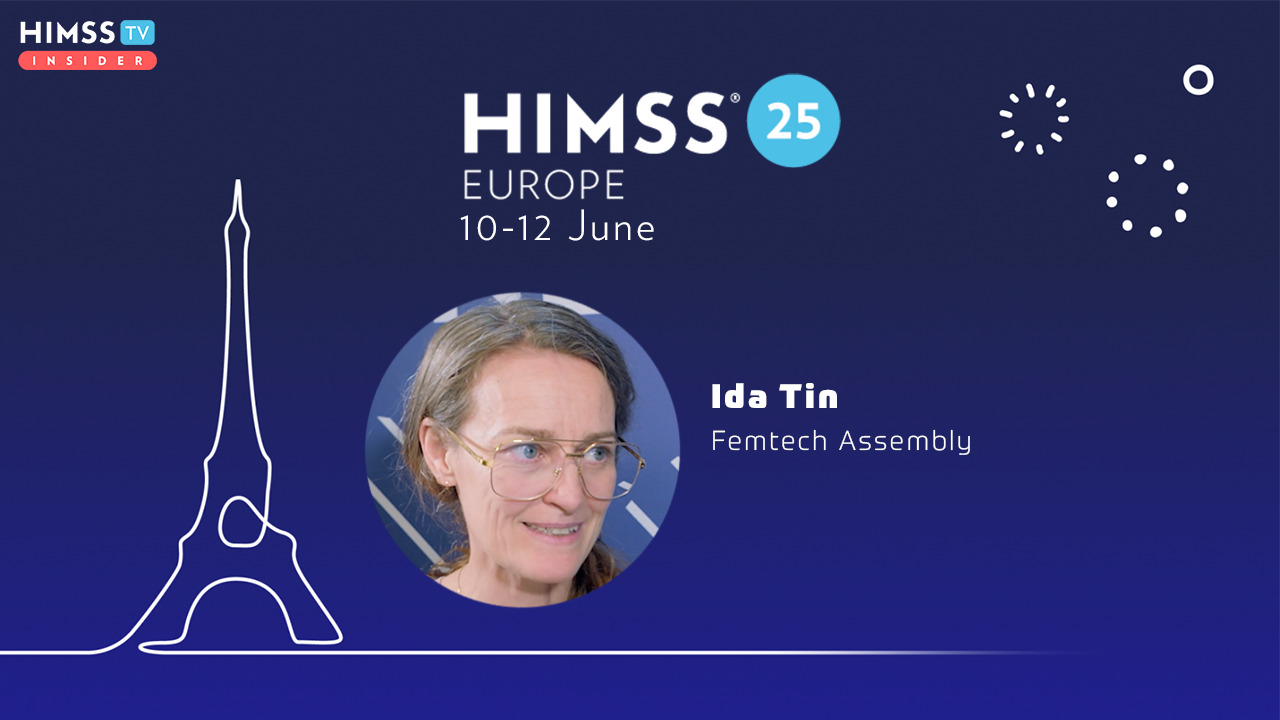
Ida Tin, founder and CEO of Femtech Assembly, cites a McKinsey report that found poor healthcare for women costs $1 trillion per year worldwide and she says investing in women's health is essential to bolstering global economies and infrastructure.
The system makes it hard for primary care doctors to collect payment so that 30-40% of their time is spent on administrative tasks, says Mark Newman, founder and CEO of Nomi Health.
Rather than making cuts to Medicare and Medicaid, the government is simply rolling back funding to pre-pandemic norms, says Dr. Don Rucker, chief strategy officer at 1upHealth, who led the ONC during the first Trump administration.
Anil Soni, CEO of the WHO Foundation, discusses the organization's $3.6 million fundraising campaign, with dollar-for-dollar matching, to support the Global Measles and Rubella Laboratory Network in its mission to control both diseases.
Molly Gibson, president of future science at Lila Sciences, discusses the company's superintelligence platform to advance scientific research, AI technology's promise in curing diseases and the risks the company is watching out for.
About 42% of births in the U.S. are paid by Medicaid, which has lower rates than other insurance, says Anu Sharma, founder and CEO of the tech-enabled Millie.
Abhinav Shashank, Innovaccer cofounder and CEO, says his company helps providers and payers connect data into a single layer that can support population health initiatives, revenue cycle automation and other large projects.
Office Practicum's Chris Gibson and Dr. Rich Szabo say participating in HIMSS' Immunization Integration Program demonstrated how the company's EHR enables pediatricians to more effectively manage and integrate vaccine data.
Dr. Sameer Vohra, director of the Illinois Department of Public Health, says its mission is modernizing data that will improve communities' well-being by driving smarter, faster public health decisions.
Saad Alhuzami of the Kingdom of Saudi Arabia's Ministry of Health discusses how the Kingdom is leveraging AI-powered screenings for chronic diseases and creating digital twins that reflect patients' medical histories and risk factors.
From retinal scans to aging clocks, AI is likely to shift healthcare from reactive treatment to proactive prevention, especially in aging populations, says Andrew Steele, author of "Ageless: The New Science of Getting Older Without Getting Old".
Olga Kagan, Food Allergy Nursing Association (FANA) president & CEO and 2025 Changemaker Award recipient, says she launched FANA to educate nurses about the emerging health concern so they can deliver adequate care and better advocate for patients.