HIMSS TV is your Insider’s Guide to everything HIMSS. We are the world’s first online broadcasting network, focused on global innovation and how information and technology are driving change in healthcare.
Multi-factor authentication doesn’t always cut it anymore while artificial Intelligence presents three major challenges for healthcare cybersecurity, explains Tony Lauro, Akamai’s security tech and strategy director.
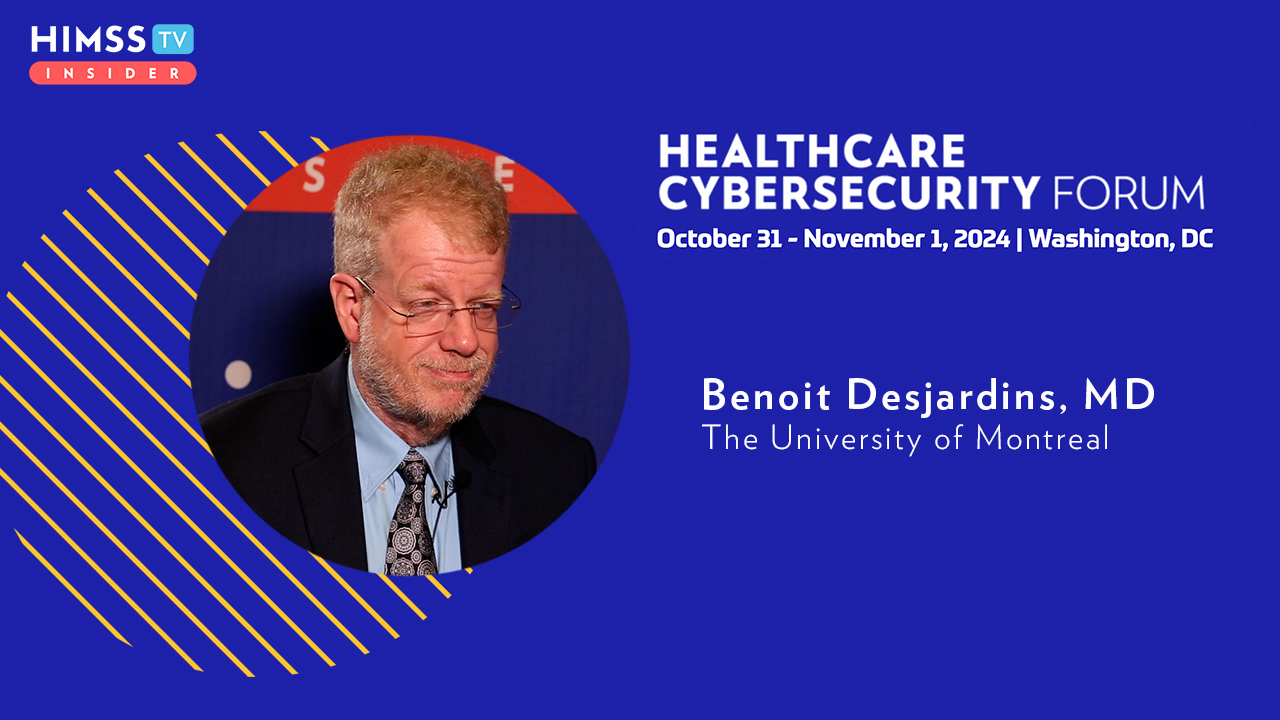
Dr. Benoit Desjardins, University of Pennsylvania radiology professor, says AI-powered radiology tools aren't yet ready to make diagnoses; they must return accurate results and save time to be truly useful to burned-out radiologists.
Jerry Shultz, president at Lightbeam Health Solutions, talks about how the company uses predictive analytics and AI to help payers and health systems determine patients' risk profiles and assign them to the most appropriate care path.
Jeff Webber, Intelliguard CTO, discusses takeaways from HIMSS24's Healthcare Cybersecurity Forum, including the need for vendor partners to help healthcare organizations understand and implement the NIST 2.0 framework.
Mark Polyak, president of global data management at Ipsos, discusses results from a recent health survey, in which 47-49% of American respondents said they had no objection to clinicians deploying AI tools to make diagnoses.
Massive labor shortage of pharmacy technicians, market and compliance challenges have left pharmacists with less time, says Plenful Founder and CEO Joy Liu.
Oron Afek, CEO of Vim, works on the provider side and Ashok Chennuru, global chief data and insights officer at Elevance Health, works on the payer side toward scaling artificial intelligence for automation.
Dr. Saurabh Gombar, adjunct faculty at Stanford Health Care and chief medical officer and cofounder of Atropos Health, discusses a study analyzing five LLMs, including ChatGPT and Gemini, examining accuracy and efficacy of the models' output.
Rather than simply alert doctors of possible medication errors, Emmanuel Bilbault, cofounder and CEO of POSOS, says the company's AI-powered clinical support platform offers alternate drugs to prescribe to avoid interaction risk.
Steven Walther, cofounder and CEO of Continuous Precision Medicine, discusses how the company's collected data assists providers in ensuring the appropriate amount of pain medication is administered to patients for pain management.
Tabia Health cofounders, CEO Steve Pickett and president Ricardo Clemente, discuss the company's AI-powered complex chronic disease management platform, which nearly doubles treatment adherence rates.
Sal Lo, CEO of Jorie AI, talks about how the company's automated claims adjudication product reduces administrative workload and helps healthcare organizations, including the VA, speed up eligibility verification and claims processing.